
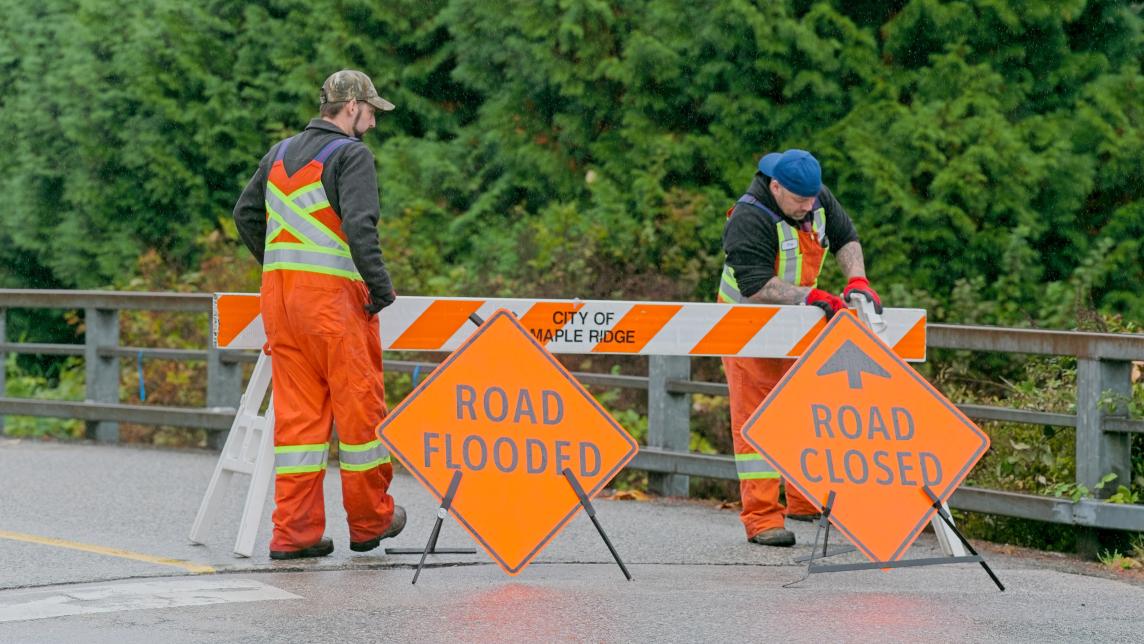
Maple Ridge, B.C., March 11, 2026 – Maple Ridge Council has directed staff to move forward with the development of a Hazards Framework for the City, using a phased and coordinated approach to modernizing land use regulations in response to increasing natural and climate-related risks.
The Hazards Framework Project Overview outlines the City’s existing hazard-related land use tools and sets out a work program to update policies and regulations based on current science, climate projections, and anticipated growth pressures.
“As climate change accelerates, communities like Maple Ridge are experiencing more frequent and severe events, as we’ve seen in recent years with atmospheric rivers, flooding, drought, and extreme heat,” said Mayor Dan Ruimy. “This framework is about protecting people, homes, and infrastructure while ensuring we’re planning responsibly for growth. Acting now helps reduce future risk, improves resilience, and supports better long-term decision-making for our community.”
Maple Ridge’s geography — from low-lying floodplains along the Fraser River and major watercourses, to steep slopes, upland terrain, and forested areas — exposes the community to a range of natural hazards, including flooding, slope instability, wildfire, extreme heat, and drought. These risks are increasing alongside the pressures of rapid population growth and provincially mandated housing targets.
Strategic Alignment and Phased Approach
The Hazards Framework project will focus on prevention and mitigation using tools the City has, such as new and updated development regulations, floodplain standards, and hazard-related Development Permit Areas. The work will be timed so that actions happen in line with technical readiness, staff capacity, upcoming planning initiatives, and available capital and operating budgets.
“We're planning responsibly for the future by providing clear natural hazard mapping and development standards and regulations that reflect today’s risks,” said James Stiver, Director of Planning and Building. “The Hazards Framework project will bring updated hazard data, climate science, and land use regulations together, so future growth decisions are evidence-based, transparent, and resilient. It protects public safety and the environment, while giving property owners, builders, and the City a shared understanding of risks in hazard-prone areas when new development or redevelopment is proposed.”
Over time, the Hazards Framework is intended to help the City:
- improve public health and safety;
- strengthen consistency across policies, bylaws, and development tools;
- reduce long-term financial impacts and legal risk;
- advocate and support eligibility for provincial and federal resilience funding; and
- establish a strong technical foundation ahead of the planned Official Community Plan (OCP) update.
Developing the Framework aligns with Council’s strategic priorities and builds on recently adopted initiatives, including the City’s community climate action plan Resilient Futures 2050 and the Urban Forest Management Plan. It will also integrate with the work that is underway and data that has been generated by neighbouring municipalities, Metro Vancouver, and Fraser Valley Regional Districts.
The Hazards Framework demonstrates how Maple Ridge is taking responsible, proactive action at the local level, particularly as the Province moves toward requiring local governments to integrate climate and hazard risk assessments into future land use planning, development regulation, and infrastructure investment through updates to the Emergency and Disaster Management Act that are anticipated in 2027.
Next Steps
The first phase of work in 2026 will focus on floodplain management and a city-wide natural hazard overview assessment. This will be followed by additional work on geohazards, wildfire interface measures, and ecosystem resilience. The Hazards Framework will also inform the City’s planned OCP update, ensuring future growth decisions are grounded in a shared understanding of risk and resilience.
Engagement will also be phased, beginning with early information-sharing with residents, Katzie First Nation, Kwantlen First Nation, key interest groups, community groups, and the development community—expanding later to include related regional, provincial, and federal agencies and neighbouring jurisdictions as technical work and OCP-related updates advance.
For more information, visit MapleRidge.ca/HazardsFramework or contact Amanda Grochowich, Manager of Community Planning at AGrochowich@MapleRidge.ca.
- 30 -
Media Contact
Pardeep Purewal, Senior Manager Corporate Communications and Public Engagement
T 604 466 4319 C 778 955 4249
E Media@MapleRidge.ca