
The City’s environmental initiatives are intended to protect and increase the health, diversity, and resiliency of the environment.
City Advances Climate Action
The City of Maple Ridge is advancing key actions that support the City’s Climate Action Plan, Resilient Future 2050, with work underway to strengthen flood resilience, modernize environmental protection and restore McKenney Creek. Read the full News Release.
Floodplain Management Bylaw
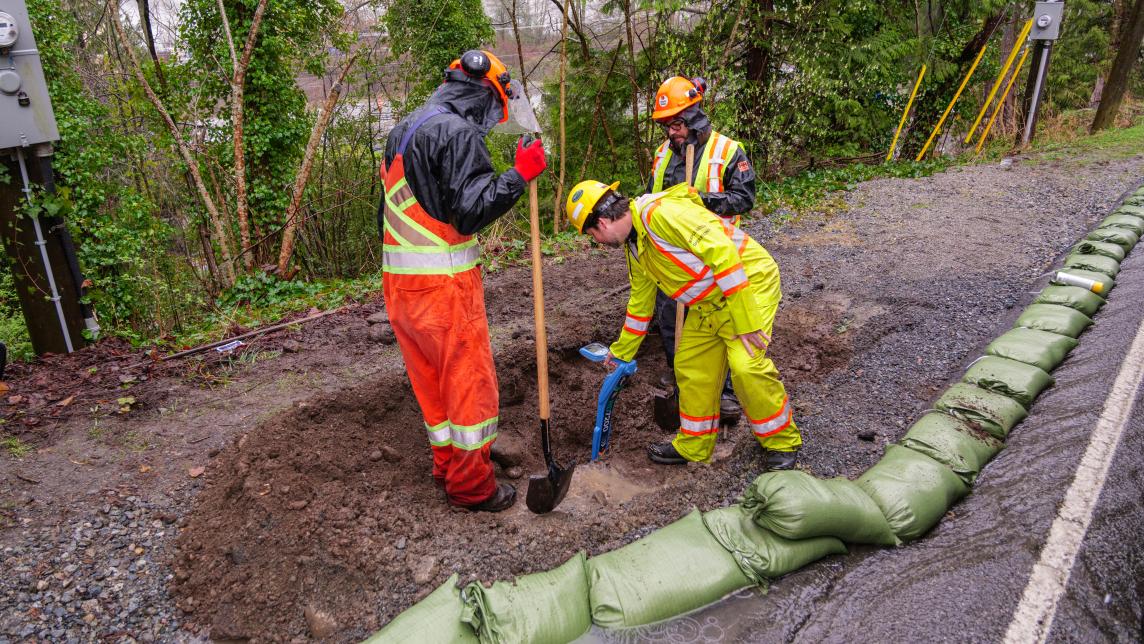
Maple Ridge Floodplain Management Bylaw 8121-2026 was adopted at the July 28, 2026 Regular Council Meeting. This bylaw is now being used by staff and Council when reviewing development, subdivision, and rezoning applications to help reduce flood risk, improve community resilience, and ensure development occurs safely in areas affected by flood and groundwater hazards. Effective January 1, 2027, the bylaw will be used by staff for building permit applications.
Biodiversity Framework
We are developing a new Biodiversity Framework to strengthen how biodiversity is understood, protected, and monitored across the community. The framework will bring together existing ecological information and establish measures to help guide land use decisions, protect natural areas, support stewardship, and track environmental health over time.
Open House (June 15, 2026)
- safer building practices through a Floodplain Bylaw
- nature-based and green infrastructure solutions
- more parks and green space
- native and edible plantings in public spaces
- restoring and reinvesting in McKenney Creek
It was especially meaningful to hear long-time residents share memories of McKenney Creek and their vision for it as the “green heart” of the neighbourhood.
Thanks again to everyone who came out, shared feedback, and helped shape biodiversity enhancements, McKenney Creek improvements, and the proposed Floodplain Bylaw.
Open House Display Boards:
Hazards Framework
At the March 10, 2026 Council meeting staff were directed to move forward with the development of a Hazards Framework, using a phased and coordinated approach to modernizing land use regulations in response to increasing natural and climate-related risks.
Hazards Framework Project Overview
The Hazards Framework Project Overview outlines the City’s existing hazard-related land use tools and sets out a work program to update policies and regulations based on current science, climate projections, and anticipated growth pressures.
Maple Ridge’s geography — from low-lying floodplains along the Fraser River and major watercourses, to steep slopes, upland terrain, and forested areas — exposes the community to a range of natural hazards, including flooding, slope instability, wildfire, extreme heat, and drought. These risks are increasing alongside the pressures of rapid population growth and provincially mandated housing targets.
The Hazards Framework project will focus on prevention and mitigation using tools the City has, such as new and updated development regulations, floodplain standards, and hazard-related Development Permit Areas.
Why a Hazards Framework is Important
Over time, the Hazards Framework is intended to help the City:
- improve public health and safety;
- strengthen consistency across policies, bylaws, and development tools;
- reduce long-term financial impacts and legal risk;
- advocate and support eligibility for provincial and federal resilience funding; and
- establish a strong technical foundation ahead of the planned Official Community Plan (OCP) update.
Environmental Planning staff are responsible for managing the Official Community Plan environmental policy, environmental development permit guidelines, environmental bylaw amendments, and strategic environmental management plans for the City.
Environmental Planning services develop and implement programs and policies to preserve and protect the community's rich natural environment. Services include:
- Enhancement and restoration
- Environmental assessments and inventory mapping
- Environmental bylaw enforcement
- Environmental permit review for trees, soils, erosion control, hillsides and watercourse management
- Environmental policy and protocol development
- Environmental review to support development applications
- Hazard management
- Natural area preservation
- Public education and outreach
- Rainwater and stormwater management
- Environmental Policy Planning
Environmental & Community Engagement
Staff are involved with community engagement initiatives related to the natural environment. They are responsible for liaison work with other environmental senior agencies including federal, provincial, and regional governments. They also provide guidance opportunities for collaboration, and technical assistance to the general public, municipal advisory groups, the development community, stewardship groups, educational institutions, and other local governments.
Climate Action Plan: "Resilient Future 2050"
Maple Ridge is moving decisively toward a low-carbon, climate-ready future with Council’s endorsement of the City’s first-ever Climate Action Plan. Resilient Future 2050: Moving Boldly Toward Low-Carbon Resilience charts a clear path to reduce greenhouse gas emissions, build climate resilience, and support sustainable growth.
Learn more about the Plan and its 58 actions at MapleRidge.ca/ResilientFuture2050.
Environment Development Planning & Permit Review
Environmental Planning is also responsible for the issuance of permits, front counter inquiries, and compliance and enforcement issues. In addition, staff process and administer environmental development permit files and are involved with:
- land use inquiries
- pre-development and development meetings
- variance applications for senior environmental agencies
- enhancement, restoration, and natural hazard initiatives
Staff support is provided to the Advisory Design Panel and the Board of Variance, and they assist other departments with environmental-related duties and provide supplemental support in the area of urban trees.