
Maple Ridge, BC — June 15, 2026 — Maple Ridge is advancing a new Planning for Longevity approach that will help shape how the City plans housing, neighbourhoods, services, and public spaces to support residents at every stage of life.
Developed as part of the City’s Housing Action Plan, Building Our Community for All, planning for longevity shifts seniors-focused initiatives toward a life-course approach that considers how community design, housing, and services influence health, independence, and quality of life over time.
“Planning for longevity is about making sure Maple Ridge remains a community where residents can thrive at every stage of life,” said Mayor Dan Ruimy. “As our population changes, we need to plan for the housing, services, public spaces, and neighbourhood connections that help residents stay active, independent, and included. This framework gives us a stronger foundation for planning complete, caring communities that support residents now and into the future.”
The Planning for Longevity approach is guided by three core principles:
• creating compact, complete neighbourhoods that support everyday activity, social interaction, and access to services.
• planning proactively for social infrastructure and amenities that help people remain connected and supported as they age.
• strengthening partnerships, local data, and community-based planning to better understand and respond to changing needs.
Demonstrating this shift, the City partnered with graduate students from UBC’s School of Community and Regional Planning (SCARP) and members of the Seniors Network.
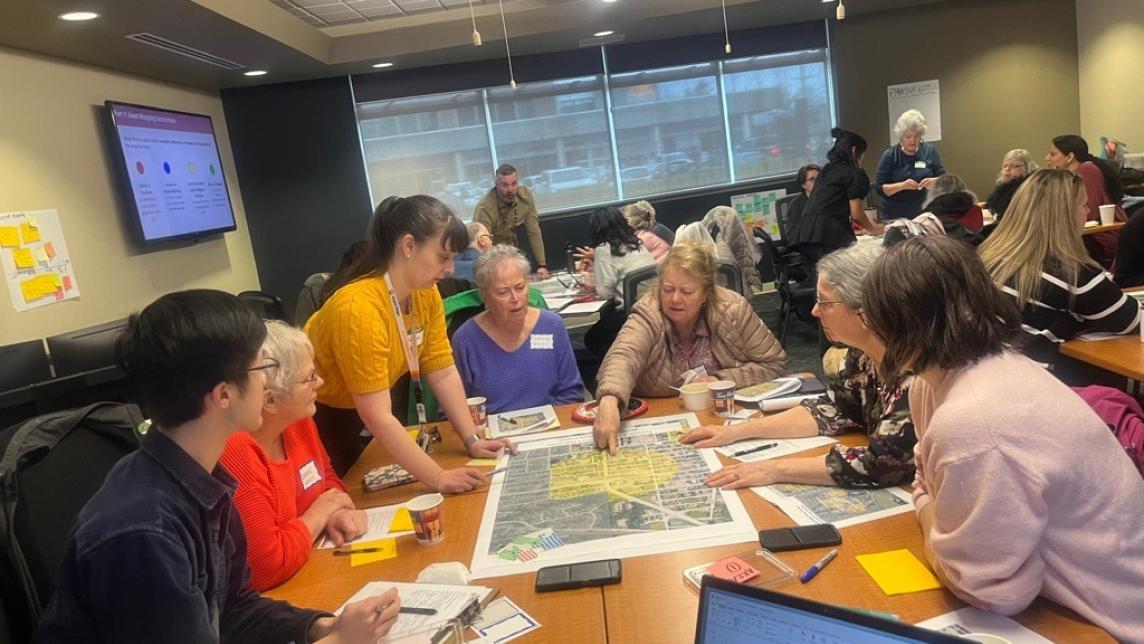
The eight-month SCARP studio project focused on the Town Centre neighbourhood, where many older adults live. Students worked with residents, community organizations, service providers, and City staff to explore how Maple Ridge can better support people as they age while remaining connected, independent and engaged in community life.
The student team examined demographic trends, reviewed research, conducted site visits and facilitated community workshops and engagement sessions. Their work identified several priorities including:
• improving pedestrian accessibility
• expanding housing options that support aging in place
• creating welcoming public spaces
• fostering opportunities for social connection
• strengthening partnerships with community organizations so older adults can have better access to community services
“Good planning recognizes that people’s needs change over time,” said Amanda Grochowich, Manager of Community Planning. “The SCARP partnership provided valuable research and community insights that will help inform future policy decisions across the city, translating our Planning for Longevity approach into outcomes. This approach helps us better integrate housing, transportation, public space, and social infrastructure so Maple Ridge can continue to grow as an inclusive and connected community. “
Maple Ridge endorsed its Age-Friendly Community Action Plan in 2016 and became the first community in British Columbia to join the World Health Organization’s Global Network of Age-Friendly Cities and Communities in 2019. The Planning for Longevity approach expands on Maple Ridge’s long-standing commitment to age-inclusive planning.
Next Steps
Over the next year, staff will continue refining the Planning for Longevity approach through additional research and engagement, including a well-being needs assessment to better understand service gaps and infrastructure needs across the community. That work will help guide a future social infrastructure plan and support implementation actions for a more liveable, age-inclusive Maple Ridge.
For more information, visit MapleRidge.ca/LongevityPlanning.
- 30 -
Media Contact
Pardeep Purewal, Senior Manager Corporate Communications and Public Engagement
T 604 466 4319 C 778 955 4249 E media@MapleRidge.ca